
How Pic's Peanut Butter turned 10.3 seconds of Nelson sunshine into a jar of peanut butter

It takes 10.3 seconds of Whakatū Nelson sunshine to make one jar of Pic's Peanut Butter. On a good day, the solar panels on the roof of Peanut Butter World generate enough energy to roast around 3.3 million peanuts. When the clouds roll in, the grid electricity Pic's draws is matched 100% with renewable energy from Meridian's Benmore Hydro Station - meaning their Scope 2 electricity emissions are effectively zero.
The problem
Fresh-roasting peanuts is what makes Pic's Peanut Butter taste the way it does. It's also one of the most energy-intensive parts of making it.
For a business that has always tried to be good for people and planet, that tension was hard to ignore. You can't swap out the roasting - it defines the product. But the energy powering it was an obvious place to start.
The question was how to reduce the impact without touching what makes Pic's Pic's.
How Pic's Peanut Butter went solar
In April 2022, Pic's installed 486 solar panels on the roof of Peanut Butter World in Whakatū Nelson, creating the world's first solar-powered peanut roastery. In the years since, the system has provided around 30% of the factory's annual energy demand - and considerably more during the long sunny days of a Nelson summer. That translates to 50,000 jars of peanut butter produced from solar power every month.

You can watch the solar installation in action here:
But the solar installation is one piece of a wider approach. Pic's recycles or reuses most cardboard and pallets, sends peanut sacks to a local gardening company, and has soft plastics collected to be remade into products like fence posts. Most consumer packaging is recyclable, and in Whakatū Nelson they offer returnable 1kg glass Perfit jars for a $5 discount. Each year Pic’s donates more than 1500kgs of not quite perfect product to food rescue programmes and local predator trappers.
They're also supporting peanut-growing trials in Te Tai Tokerau Northland - a long-term project to grow more raw material closer to home and reduce supply chain carbon.
Sustainability at Pic's isn't managed from a single team. Energy, sourcing, packaging, waste, and community work are spread across the business, with B Corp certification providing the independent accountability framework that holds it all together.
The impact
Pic Picot explained that seeing the roof of Peanut Butter World covered in solar panels, while the roastery below kept turning out fresh roasted peanut butter, made the idea very real. The calculation that it took about 10.3 seconds of Whakatū Nelson sunshine to generate enough energy to produce one jar of Pic’s Peanut Butter stood out as a key memorable moment.
Their 2025 B Corp recertification was another important moment. Improving their score from 104.7 to 107.5 showed that the work was not just a collection of good intentions. It had been independently assessed, and they had continued to improve.
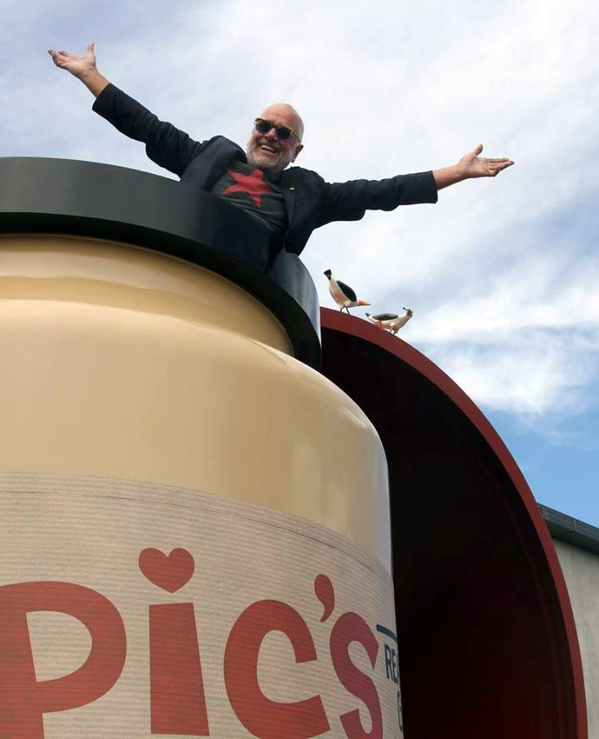
"Our products are grown by the sun and now they're processed by the sun too." - Pic Picot, Founder and Chief Peanut Butter Maker, Pic's Peanut Butter
Why it matters to other companies
Pic's story is a useful one because it starts with a constraint, not an aspiration. The roastery couldn't change. The energy powering it could.
That's the practical logic behind a lot of the best B Corp work: Find the biggest impact you can actually influence, and do something real about it. Independent assessment through B Corp then does what good frameworks do - they expose the less glamorous gaps as well as recognising the progress.
Want to try something similar?
Solar installation depends on your building, energy profile, and location - Pic's is frank about that. But the underlying method doesn't. Any business can map its largest sources of impact, look at what existing infrastructure could be used differently, choose renewable electricity, and get staff and suppliers on board.
"Start with the biggest impact you can actually influence, measure it, and do one practical thing about it. Don't wait for a perfect master plan - sustainability is a job that is never quite finished. Make a credible change, measure what it achieves, be honest about what remains unresolved, and then keep going."
Explore More
Check out Pic's sustainability commitments and see their full approach at picspeanutbutter.com/sustainability.
Are you a B Corp with a good news story? We'd love to hear from you too - get in touch at caroline@s360.solutions
Want to Explore B Corp for Your Business?
Or are you recertifying under the new standards?
We love sharing good news stories, but did you know that we also offer tools and consulting services to help New Zealand and Australian businesses understand the B Corp standards and identify what they need to do to certify or recertify?
Explore at: www.s360.solutions/


